An official website of the State of Georgia.


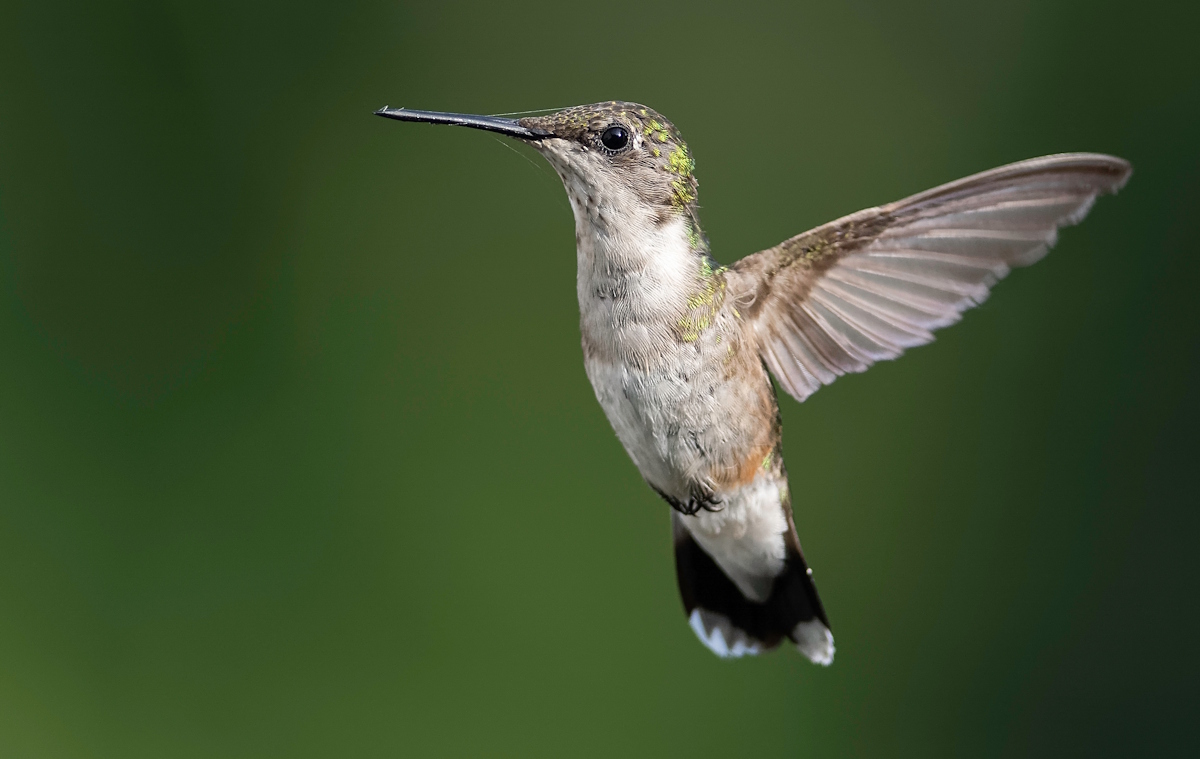
Ruby-throated hummer with spider web on its face and spider legs in its beak.
Terry W. Johnson
Our backyards are home to a wide variety of animals. Some, like the spiders, are creatures some of us try to avoid. Others, such as the ruby-throated hummingbird, are so admired we go to great lengths to attract as many of them as possible.
Ironically, spiders play a key role in the life of ruby-throated hummingbirds. The thing that connects these two very different creatures is something that is more common this time of year, even as hummingbirds become more scarce as they migrate south. That bond is the spider web.
Spider webs are extremely strong, sticky and flexible. Remarkably, based on weight, the strength of the web's high-tensile strands is equal to steel. Spiders use their amazing webs, of course, to capture food.
But ruby-throated hummingbirds visit spider webs to steal small insects caught in the web's sticky fibers. The birds will prey on small spiders, as well.
Also, when the female rubythroat is building her nest, she incorporates bits of webbing plucked from nearby spider webs. In fact, spider webs are one of the key materials used in nest construction. The fibers help anchor the nest to the limb on which it is built. They also cement the other construction materials that form the nest. In addition, the stretchy fibers allow the nest to expand. This is extremely important as it helps prevent rapidly growing young hummers from falling out of the nest.
However, hummingbird forays to spider webs can be risky. Each year hummingbirds become entangled in spider webs as they try to glean nesting material or food. Other hummers accidentally fly into spider webs spread across woodland paths or beds of flowers.
The spider that probably catches more hummingbirds in Georgia backyards than any other is the black and yellow garden spider.
This large spider weaves a broad circular web measuring about 2 or more feet in diameter. Each web is marked with a distinctive thick white zigzag pattern near the center of the web. These webs are commonly attached to the sturdy, tall stocks of zinnias and other garden favorites.
When one of these webs nets an unwary hummingbird, some spiders, sensing the struggle, will crawl to the bird and try to rapidly wrap it up in webbing, just as it would a beetle or butterfly.
In other instances, the spider simply allows the bird to struggle until it breaks free or dies. When the latter occurs, spiders will often cut the entrapped carcass loose from the web and let it fall to the ground.
If you find a hummingbird struggling in a spider web, you can gently remove it, take the bird to a cool, shady location and remove all of the fibers adhering to the its body, holding the bird loosely in one hand and carefully peeling away the tacky threads using a pair of tweezers.
You can feed the bird before releasing it, allowing it to drink hummingbird nectar offered in a shallow container, such as the plastic lid of a soft drink bottle. Feeding the bird can help a hapless hummer regain some of the energy expended while struggling in the web.
When the hummingbird seems to have regained its strength, place it on the palm of your hand in a shady spot. When it is ready, it will begin rapidly beating its wings and take flight. Birds that don’t quickly respond can be placed in a cool place to recover and fly away when they’ve recovered.
I can say it is truly rewarding to see a rescued hummingbird fly away.
Meanwhile, these two creatures – bird and arachnid – will continue to interact in natural ways that each spring and summer include benefits and risks for both.
Terry W. Johnson is a retired Georgia DNR program manager and wildlife biologists. Check out past columns, his Backyard Wildlife Connection blog and his book “A Journey of Discovery: Monroe County Outdoors.” Permission is required to reprint a column.