An official website of the State of Georgia.
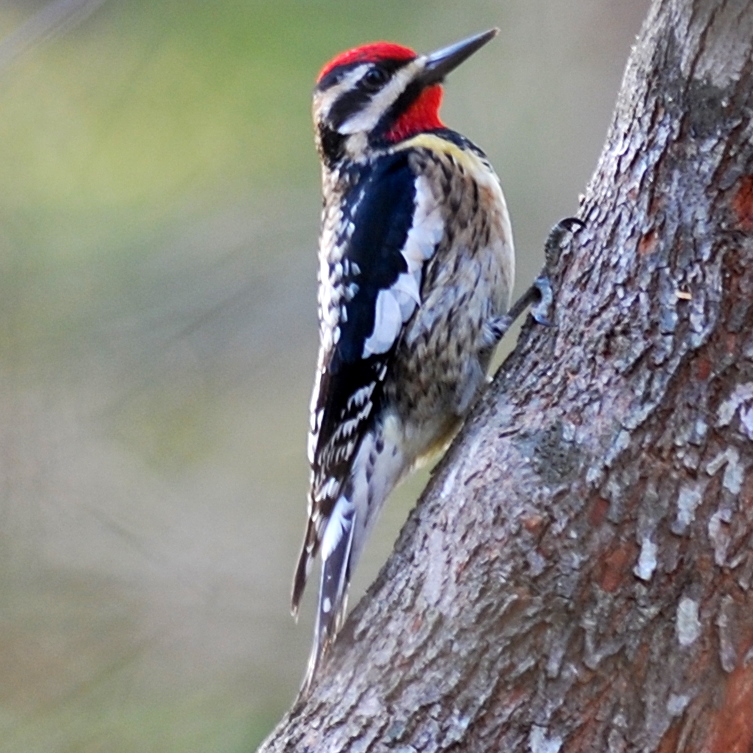
Yellow-bellied sapsucker (Terry W. Johnson)
By Terry W. Johnson
When the first ruby-throated hummingbirds arrive in our backyards each spring, they often find nectar-bearing flowers are few and hard to find. This may come as somewhat of a surprise since exotics plants such as Bradford pears, forsythias, baby’s breath, daffodils and the like are blooming. The problem is, these plants produce little nectar.
While our native redbud trees are also in full bloom, they too are light on nectar. This is unfortunate as the migrating hummingbirds desperately need to restock the fuel they expended reaching Georgia. Regrettably, redbuds do little to satisfy this need. However, the tree’s dark pink blossoms do attract large numbers of small insects, which supply rubythroats with much-needed protein.
Of course, those hummingbirds that find their way to our backyards also benefit from our feeders stocked with calorie-rich sugar water. But that begs the question, “Where do the hummingbirds that never see a feeder during migration locate enough food to meet their nutritional needs?”
Much of this food is unwittingly supplied by an odd woodpecker known as the yellow-bellied sapsucker. Yellow-bellied sapsuckers winter throughout the state. One of their main foods is the sugary sap gleaned from the trunks of trees and other woody plants. Here is how it works.
Throughout the day, sapsuckers chisel shallow holes in the bark of woody plants – more than 1,000 species of them. The sugar content of the sap found in these plants varies from 10-30 percent. Sapsuckers tend to favor excavating holes in trees that contain sap with the higher sugar levels. These mini reservoirs the birds make are arranged in concentric circles around the trunks of the plants.
Sap oozes into the shallow reservoirs. The sapsucker’s tongue is tipped with what looks like a brush. This enables the birds to “mop up” the sap that wells up in each shallow hole.
But other animals take advantage of the sugary sap that collects in these reservoirs. The sap is eaten by squirrels and a variety of insects, including butterflies. Even other birds, such as cedar waxwings, yellow-rumped warblers, brown-headed nuthatches, Carolina chickadees, ruby-crowned kinglets and – as we’ll discuss further – ruby-throated hummingbirds, dine at the sapsucker cafes.
Rubythroats use their ability recognize the yellow-bellied sapsucker’s sounds to find sapsucker holes. They will also follow sapsuckers as the woodpeckers fly from tree to tree visiting the holes they’ve excavated throughout their winter-feeding area.
Typically, a sapsucker will maintain 10 to 20 or more holes at a time. Each day, they work to keep the sap flowing in existing holes and chip out new feeding spots.
Of course, the woodpeckers also chase away any critters that try to eat the sugary food. But hummingbirds are known to perch near trees containing sapsucker holes and wait until the sapsuckers leave before availing themselves of the sap. Both hummingbirds and sapsuckers also gobble up any insects attracted to this valuable food source. These insects are an important source of protein. (Interestingly, sapsuckers will sometimes dip a bee or other insect in the sap before swallowing it.)
How important are yellow-bellied sapsuckers to ruby-throated hummingbirds? Very. In fact, they are so important that ruby-throated hummingbirds time their spring migration so that it allows them to closely follow the northward movement of yellow-bellied sapsuckers. This ensures the hummers will have reliable sources of food wherever they stop to rest and refuel.
In addition, rubythroats that nest within the breeding range of the sapsucker will often nest in areas where yellow-bellieds maintain feeding holes throughout the spring and summer.
I think you would agree me that the relationship between the ruby-throated hummingbird and the yellow-bellied sapsucker is truly amazing. While the sapsuckers are not benefitted by the rubythroats, they provide hummers with an invaluable source of food.
If you want to enhance your enjoyment of watching hummingbirds, take a walk around your yard and see if sapsuckers are maintaining holes in the trees near your home. If they are, pull out a lawn chair, kick back and wait. If you are lucky, you just might see a hummingbird dining at what could be called Mother Nature’s hummingbird feeders.
Terry W. Johnson is a retired Georgia DNR program manager and executive director of The Environmental Resources Network, or TERN, the friends group of DNR’s Wildlife Conservation Section. Check out past columns, his Backyard Wildlife Connection blog and his book “A Journey of Discovery: Monroe County Outdoors.” Permission is required to reprint a column.