An official website of the State of Georgia.

To keep you and Georgia wildlife safe, enjoy watching from a safe distance. Touching or moving wildlife can result in injury to yourself and possibly harm (or death) for the animal. In most cases, the best thing you can do is to leave wildlife alone.
It is illegal to attempt to care for wildlife in Georgia unless you have a specific permit from the Georgia Department of Natural Resources.
Review the following information on what to do if you see sick, injured, or "orphaned" wildlife.
"Orphaned" Wildlife
“If you care, leave them there.”
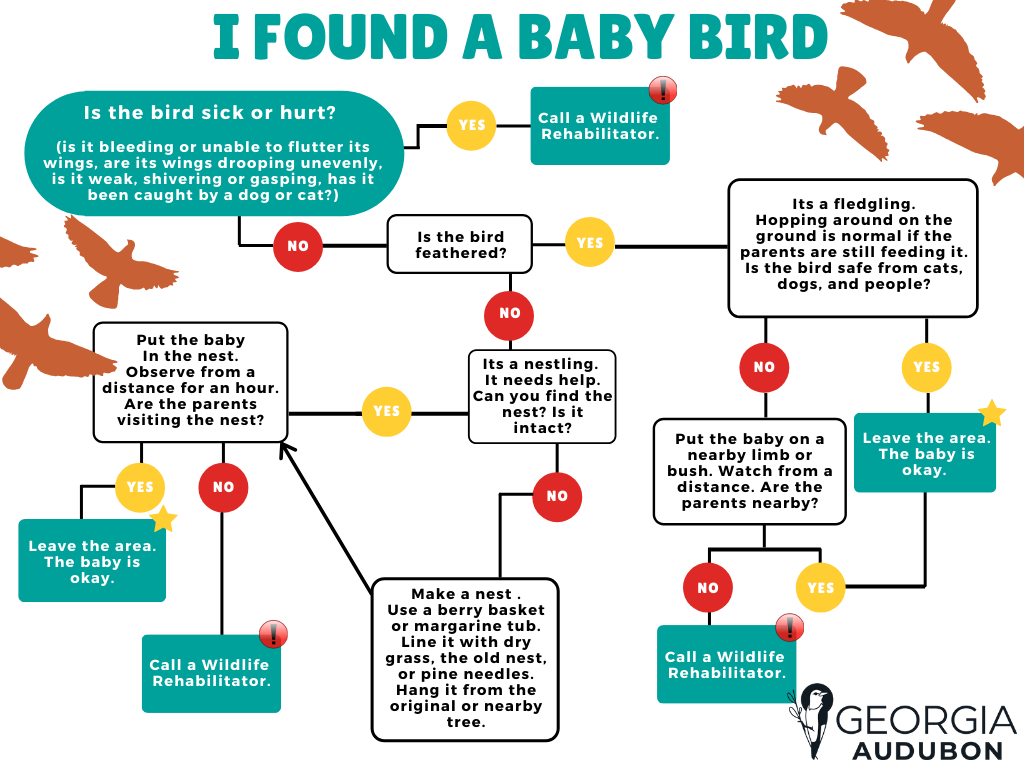
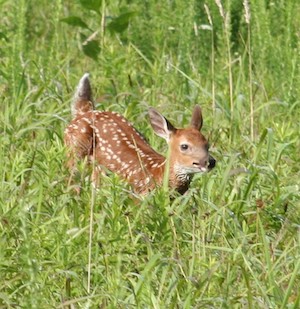
It's common to encounter young wildlife on their own, especially in spring and summer. The adult has likely left to forage or moved off to create a distraction in order to protect their young. In almost all cases, it’s best to leave the animal alone. Wildlife has a much better chance at survival when they are not disturbed by humans.
- Young birds: I found a baby bird, what do I do? Visit this link to find out: https://bit.ly/4tv46Bk
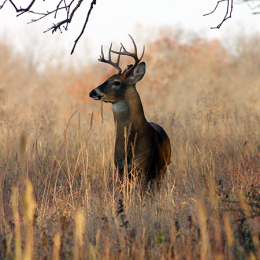
- "Orphaned fawns": I found a fawn, what do I do? Fawns are likely not orphaned, but instead hidden by the does for the first few weeks of their lives to avoid predators. It is not uncommon to see a fawn by itself. Does will leave fawns in protected areas, like a fenced yard, to help protect them from predators. Never pick up a fawn. You should only call a permitted wildlife rehabilitator when:
- You are certain the doe is dead.
- The doe does not return after 24 hours.
- Visit this link to find out more: https://bit.ly/4sp76OL
Sick or Diseased Wildlife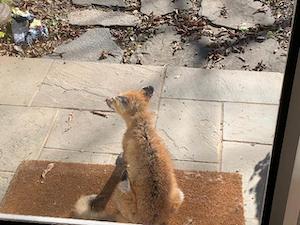
Like humans, wildlife are susceptible to illness and disease. Many of these diseases can be shared between wildlife, domestic animals, and humans. Learn about different disease, how to identify them, and how you can help. If you need assistance with sick wildlife, call 1-800-366-2661.
- Report sick or dead wildlife in Georgia at this link.
- Rabies
- Mange
- Distemper
- Chronic Wasting Disease
- Epizootic Hemorrhagic Disease
- Bats
- Avian Influenza
- New World Screwworm
Injured Wildlife
Wildlife are extremely resilient and often heal from injuries on their own. In most cases, it is best to leave them alone and not assist. In cases that require intervention, wildlife must be handled by permitted individuals. Find that list below:
Wildlife Rehabilitators

- Visit https://gadnrle.org/special-permits#rehabilitation for an up-to-date list of wildlife rehabilitators by county
- Report marine animal strandings
- Report a banded bird: 1-800-327-BAND (2263)
- Become a Wildlife Rehabilitator